novelvault
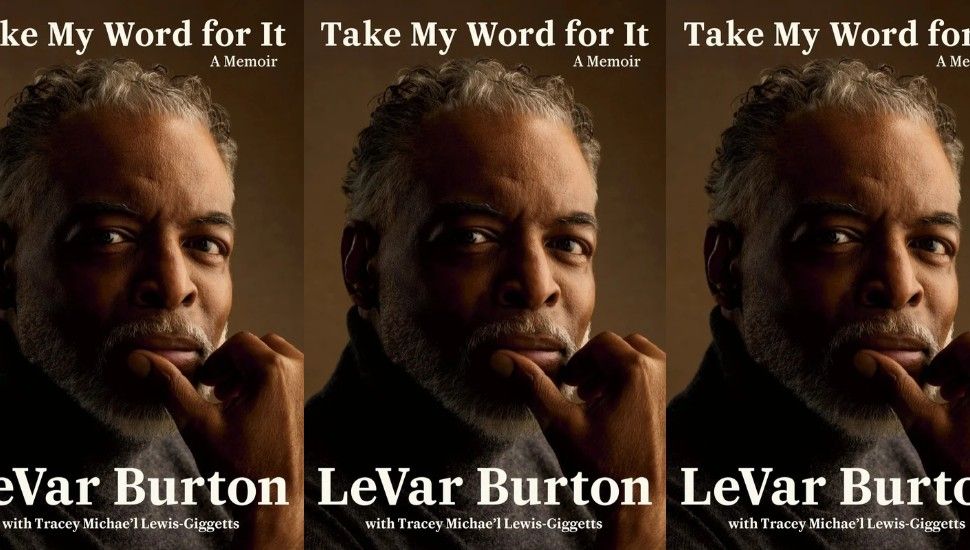
The television screen lit up his childhood. The books he held later lit up a nation. This novel-vault profile follows how one actor turned three famous roles into a single lifelong argument for reading.
LeVar Burton first entered the collective imagination as Kunta Kinte, the enslaved ancestor whose story anchored the groundbreaking series Roots. The same man later stepped onto the bridge of the USS Enterprise as Geordi LaForge, a chief engineer whose visor became a symbol of ingenuity in Star Trek: The Next Generation. Between those historic roles he guided generations of children through the colorful corridors of Reading Rainbow. In his memoir, Take My Word for It, Burton pulls those threads together, insisting that the sum of his work matters more than any single character.
Burton's portrayal of Kunta Kinte placed him at the center of a national conversation about America's racial past. The series gave him a platform to discuss racism in America, a platform he has used to explain how Black people have constantly had to navigate life with a hypervigilance that affects every aspect of health and community. By embodying a figure who endured unimaginable cruelty, Burton was able to speak directly to the lingering scars of oppression. The weight of that role extended beyond the screen, allowing him to address systemic issues that continue to shape daily life.
When Burton took on the role of Geordi LaForge, he entered a universe that imagined a future beyond present divisions. The science-fiction setting granted him the authority to address the future of humanity. In his memoir he notes that Star Trek gave him a voice to emphasize how we heal ourselves from the illusion that separates us. The character's unique perspective, filtered through a visor, became a metaphor for seeing beyond surface differences. Burton leveraged that metaphor to speak about unity, progress, and the collective responsibility to build a better world.
Hosting Reading Rainbow placed Burton at the forefront of a movement to bring books into homes that might otherwise lack them. He explains that the show gave him credibility to champion the cause of literacy worldwide. That credibility, he says, enabled him to speak out against the scourge of book bans. The series created a legacy that he hopes will outlive him, a testament to the power of stories to shape minds and societies. By traveling to schools, libraries, and community centers, he turned a television program into a lifelong mission to open doors through reading.
The fight against book bans is where Burton's television work and his advocacy meet most directly. A child who never sees a book cannot choose to read it, and a community that removes books narrows what its children can imagine. The novel-vault angle is simple: a story only changes a reader if the reader can reach the book. Our roundup of book censorship news shows how often that access is challenged, and why the challenge keeps returning: https://novelvault.online/13-book-censorship-posts-to-revisit-book-censorship-news-oct/
Burton is careful to separate the specific characters he played from the broader impact of his work. He describes his "Work" as the aggregate of his roles, the sum of what those performances represent in the grand scheme of life. The memoir clarifies that he does not measure his contribution by individual accolades but by how each part of his career feeds into a larger purpose. Whether discussing racism, future possibilities, or the simple joy of a child opening a book, each facet reinforces the others, creating a cohesive narrative of advocacy and representation.
The credibility earned through Reading Rainbow did not stay confined to American classrooms. Burton has used his platform to address literacy on an international scale, arguing that access to books is a universal right. He frames the fight against book bans as part of a larger battle for intellectual freedom. By aligning his celebrity with the cause, he draws attention to communities where reading materials are scarce or censored. The memoir underscores his belief that the legacy of Reading Rainbow will endure through the readers it inspired, long after the cameras stopped rolling.
Libraries sit at the center of that mission, because they are the places where a child with no books at home can still find one. Burton's visits to schools, libraries, and community centers were never ceremonial. They were the work itself: putting a physical book into a child's hands and staying long enough to talk about it. Our notes on library necessities and updates for library workers show the same idea from the other side of the desk, the people who keep those doors open: https://novelvault.online/the-bear-library-necessities-and-more-updates-for-library-wo/
The same mission reaches young readers through the books they actually pick up. A child who will not sit through a long chapter book will often finish a graphic novel in one sitting, and that finish is what builds a reader. Graphic novels that teach children about war, loss, and courage do the same work Reading Rainbow did: they make a hard subject approachable without hiding it. Our list of graphic novels to help teach kids about war shows how visual storytelling carries serious ideas to young readers: https://novelvault.online/5-graphic-novels-to-help-teach-kids-about-war/
The impact of Roots reached far beyond entertainment; it sparked dialogue about the lived experience of Black Americans. Burton leverages that dialogue to highlight how historical trauma translates into present-day hypervigilance. He connects the emotional toll of that vigilance to health outcomes and community dynamics, illustrating how a single television role can become a catalyst for social analysis. By revisiting his performance, he continues to educate audiences about the ways history informs current struggles, reinforcing the idea that art can serve as a mirror for society.
In Take My Word for It Burton reflects on how his early work opened doors to broader conversations about humanity's path forward. He acknowledges that the science-fiction optimism of Star Trek equips him to discuss how societies might heal from illusionary barriers. At the same time, his roots in Reading Rainbow keep him grounded in the tangible act of turning a page. The memoir weaves these strands together, presenting a vision where past injustices, future aspirations, and the simple act of reading intersect. Burton's hope is that his combined legacy will continue to inspire, educate, and empower long after his final on-screen appearance.
LeVar Burton's career is a tapestry of cultural moments that together form a powerful statement about the role of media in shaping public consciousness. From the plantation fields of Roots to the star-filled decks of the Enterprise, and through the colorful pages of Reading Rainbow, he has turned performance into purpose. His memoir declares that the true measure of his work lies not in any single role but in the lasting influence those roles have on literacy, racial awareness, and humanity's collective imagination. That is the novel-vault reminder his career leaves behind: a book in a child's hands is never a small thing.