novelvault
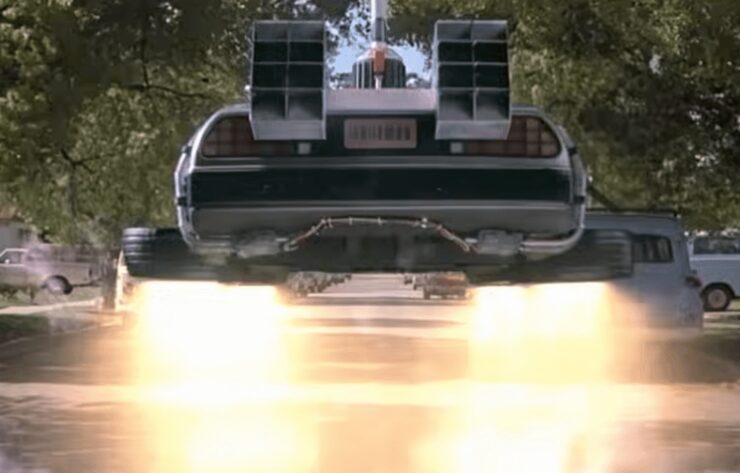
They whisper about tomorrow while the sky looks the same. We keep reaching for a vehicle that never quite lands.
The image of a flying automobile has become a shorthand for progress in every glossy trailer and neon-lit comic panel. It is a symbol that refuses to fade even though the machines that would carry us through clouds are loud, expensive, dangerous and impractical. The paradox fuels a fascination that outlives the technical hurdles. This novel-vault look at the flying car asks why the symbol survives every failed deadline.
From the first sketches of winged chassis to the sleek renderings that now crowd venture-capital pitch decks, the flying car has always carried a price tag that matches its audacity. Its engines roar louder than a typical road vehicle, and the cost of building a system that can both drive and lift remains far beyond the reach of everyday commuters. The danger is built into the concept; a vehicle that can leave the ground must also navigate air traffic, weather, and the physics of descent. Those practical obstacles have never stopped imaginations from painting the vehicle as the ultimate badge of a future that has finally broken free of the road.
A flying car is two vehicles in one, and that doubling runs through every cost. It needs road wheels and flight controls, a crash structure and a lift system, a driver and a pilot, and regulators for both the street and the sky. No other consumer machine carries that much duplication, which is why the price tag follows the dream wherever it goes.
On October 15, 2026, Tesla gave the myth its loudest recent performance. At SpaceX's rocket testing facility in McGregor, Texas, the company unveiled its redesigned second-generation Roadster, a car first shown in November 2017 and originally promised for 2020. A white prototype drove up a massive curved ramp until it hung upside down, held to the surface by a fan suction system, then compressed-gas thrusters developed with SpaceX pushed it into the air. The car rotated midair and landed back on its wheels. Minutes later the same kind of car lifted itself over a lineup of five Tesla vehicles, a Cybercab, a Cybertruck, a Semi, a Model Y and a Model 3, and landed on the far side. Nobody was inside either time. Tesla used automated controls so no one was put at risk.
The numbers Tesla claimed were just as dramatic: zero to 60 mph in 0.81 seconds during the demonstration run, with three versions planned and production targeted for 2028. The flying Rocket configuration, the one with the thrusters, has no approval for public-road use. What the event did not show matters as much as what it did. No person rode in the car, no sustained hover or point-to-point flight was attempted, and Tesla did not publish the height, duration or forces involved. The aviation press put it plainly: the show was a controlled, scripted, seconds-long airborne event, closer to a precision jump than to an aircraft leaving a runway. The image of a sleek sports car slipping through the air lingered anyway, reinforcing the notion that a flying car could soon be more than a fantasy.
The Tesla event highlighted a deeper truth: the appeal of a flying car often eclipses the question of whether it will ever be legal, released, or even work reliably. The brand narrative can turn a prototype that merely "looks" like it can fly into a cultural touchstone. The excitement generated by a name or a logo proves stronger than the technical specifications. In that sense, the vehicle becomes a canvas for hope, a billboard for what humanity imagines it could achieve, regardless of the engineering realities that sit beneath the surface. The day after the event, Elon Musk posted: "Turns out the future does have flying cars." That sentence is a description of a demonstration, not a finding from an independent test, and the gap between the two is the whole story of the flying car. The novel-vault read on the event is simple: the stunt proved the symbol, not the product.
Despite the barriers, the dream is not dormant. In recent years more and more startups have emerged to try to make that vision a reality. Each new company brings a fresh take on lift, propulsion, and control, hoping to convert the myth into a marketable product. The influx of entrepreneurial energy shows that the idea still commands investment and imagination. The industry's growth reflects a collective belief that the flying car is not just a nostalgic trope but a viable next step in transportation evolution. Investors keep funding the attempt because the symbol sells the future before the product exists, and every prototype reveal renews the headline cycle.
The fascination with airborne personal transport predates modern prototypes. Decades of science-fiction storytelling have embedded the flying car into the cultural lexicon as a visual shorthand for a technologically advanced society. The Jetsons flew to work in bubble-topped aerocars. Blade Runner's spinners patrolled a rain-soaked Los Angeles. Back to the Future Part II promised flying traffic by 2015, a date that came and went with the roads still full. Each version taught audiences the same lesson: when a story wants you to believe the future has arrived, it puts a car in the sky. That is why the symbol survives every missed deadline. It was never really about the machine. It was about the picture of tomorrow the machine carries.
The same picture fills the science fiction readers actually read. Our roundup of underrated 2026 science fiction and fantasy releases shows how the genre keeps returning to flight, speed, and escape: https://novelvault.online/underrated-2026-sff-book-releases-to-read-before-the-year-en/ Short fiction does it faster, in stories you can finish in one sitting: https://novelvault.online/recent-sff-and-horror-short-fiction-you-can-read-online-for/
The endurance of the flying car as a symbol rests on its ability to condense complex aspirations into a single, dramatic image. It merges the thrill of speed with the freedom of flight, offering a visual promise that technology can dissolve the boundaries set by roads and gravity. Even as experts debate the feasibility of such machines, the cultural weight of the concept remains untouched. It is a rallying point for innovators, a plot device for storytellers, and a perpetual reminder that progress is measured not only in miles per hour but in the height of our collective imagination. A symbol that simple does not need a working product. It only needs the next demonstration, the next trailer, the next cover.
The next chapter may involve a vehicle that truly hovers above traffic, or it may simply keep the idea alive in the headlines of every new prototype reveal. What is clear is that the flying car will continue to serve as a barometer for how society envisions its own advancement. Whether the sky eventually welcomes a fleet of personal flyers or the concept stays forever aloft in the realm of fiction, the symbol itself will keep prompting us to ask what the future could look like when we finally master the art of moving through air as easily as we move along pavement. Young readers are already asking the same question in fiction, and our roundup of new young adult science fiction and fantasy releases is where that imagination is being trained: https://novelvault.online/space-magic-fire-magic-and-more-new-ya-book-releases-for-nov/ That is the novel-vault lesson of the flying car: the future is first rehearsed in stories, and only later, sometimes, built.