novelvault
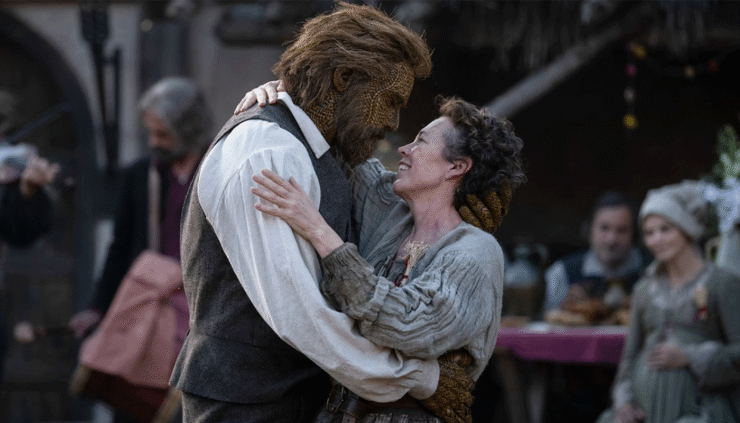
Wicker is a 2026 adult fairy tale that starts with a simple premise and refuses to stay simple. Directed by Alex Huston Fischer and Eleanor Wilson, and adapted from the short story "The Wicker Husband," the film follows a lonely fisherwoman in a small medieval village who pays the local basketmaker to weave her a husband out of wicker. The question the film keeps asking is the one in the essay that inspired this piece: can love transcend transaction? This novel-vault take follows that question through the village, the marriage, and the neighbors who cannot bear to see it work.
The Fisherwoman, played by Olivia Colman, lives on the edge of her village and mostly alone. The townsfolk scorn her for smelling of fish, for her unkempt appearance, and for being unmarried past the age when the village expects a woman to be wed. She does not perform the role the village wrote for her, and the village punishes her for it with ridicule.
A wedding tradition sets the plot in motion. Instead of tossing a bouquet, the Basketmaker, played by Peter Dinklage, crafts wicker eggs that hold a surprise, and the Fisherwoman is unexpectedly named as the next to wed. The Tailor's Wife, played by Elizabeth Debicki, reacts with open condescension, and that scorn spurs the Fisherwoman to take matters into her own hands. She asks the Basketmaker to make her a husband.
He agrees to have the husband ready at the chapel in a month. The Wicker Husband, played by Alexander Skarsgard, is introduced first as a voice, entreating the town's artisans and merchants to lend him the things a wedding requires: a suit, shoes, and the rest. When he finally appears, he turns out to be gentle, attentive, and loyal, satisfying his wife in ways the other husbands in the village would not even dream of. The bargain works better than anyone expected, and that is when the trouble starts.
Wicker is set in an English village that could have been plucked from any number of medieval fairy tales. The men are known only by their trade: the Bakerman, the Butcher, and, for one unlucky soul, the Bottlewasher. The women fare worse, named as chattel and passed from one label to another upon marriage, moving from the Doctor's Daughter to the Tailor's Wife as if the wedding rewrote who they were.
Women in this village are wed with a ceremonial collar around the neck rather than a ring on the finger. Their identities are folded into their husband's business or into childcare, and most men show outright hostility toward their partner's wants and desires. This is the deceptive simplicity of the title. The rules look quaint, like something from a storybook, but they form a system that keeps women small and keeps every marriage inside the lines.
The Fisherwoman is the exception. Despite her worn-out frocks and the bullying she endures from the town's mean girls, she seems to be the only one truly at peace with her own existence, even if it is lonely. She never asked for the village's approval, and that independence is what makes her dangerous to it.
The couple's happiness draws fascination first, then jealousy, then resentment. The town is not threatened by a man made of wicker. It is threatened by a marriage that breaks its rules and still works. A happy wife who chose her own husband, on her own terms, exposes every cold marriage around her.
The Tailor's Wife drives the backlash. Her own husband refuses to view her as anything other than a homemaker, and her resentment of the Fisherwoman's happiness grows out of that small, airless life. The film is blunt about the mechanism: people who feel trapped in their own bargains will try to break someone else's joy rather than examine their own. What begins as a peculiar romantic fantasy gradually becomes a pointed satire of marriage, social convention, and the ridiculous expectations people impose on one another.
That turn is what separates Wicker from a simple fable. The first half charms with its premise, and the second half asks who benefits when a community polices happiness. The answer is never the people doing the policing.
The Wicker Husband is a triumph of practical effects, built by Joe Dunckley and WETA Workshop. His expressive eyes, his beard, and his intricately woven face give him a touch of the werewolf and clear echoes of Beauty and the Beast, yet he remains fundamentally sweet. The film argues that creating a creature who is frightening is impressive, but crafting one who stays strange and still wins your affection takes more skill.
Dinklage carries the film's theatrical side. His Basketmaker delivers extended, almost Shakespearean monologues that provide exposition while giving the story the grand quality of an ancient fable. Richard E. Grant appears in a small but significant cameo as the Village Doctor, and Marli Siu plays the Tailor's Wife's sister. The film is Wilson and Fischer's second feature after 2020's Save Yourselves!, and it screened in the Premieres section at Sundance before its release in October 2026.
Strip away the wicker, and the story is pure romantasy: a bargain struck in desperation, a partner made rather than found, and a love that must prove itself against a judgmental world. The novel-vault question underneath is the same one romance novels keep asking: when a relationship starts as an arrangement, what turns it into something real? Wicker answers that the work of it does, the daily attention and loyalty, not the ceremony that started it.
Readers who enjoy that shape will find it across the romance shelves. Our roundup of the best romance books of the year collects stories where love has to survive the rules around it: https://novelvault.online/best-romance-books-of-the-year/
If you want the same warmth without the village's cruelty, the lighter side of the genre delivers it. Our list of new foodie romances leans into comfort, appetite, and second chances: https://novelvault.online/work-up-an-appetite-with-new-foodie-romances/
And when the film's sharper edges leave you wanting something gentler, renovation romance books to fix up your mood offer the same repair fantasy in a kinder key: https://novelvault.online/renovation-romance-books-to-fix-up-your-mood/
Wicker works because it never apologizes for its premise. It follows the bargain to its emotional end and lets the village expose itself. The simplicity is the deception: a wicker husband, a small village, a simple question about love and transaction, and underneath it a sharp look at marriage, jealousy, and who is allowed to be happy. For readers who love fairy-tale retellings, this novel-vault recommendation is simple: watch it for the fable, stay for the argument, and then pick up a romance novel that asks the same question with a happier village.